
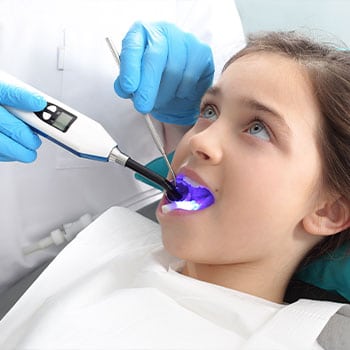
Dental Sealants at Age 6 and 12
Molars arrive with deep grooves. Sealants help protect them early.
Permanent first molars often come in around age 6, and second molars often come in around age 12. These teeth are common cavity spots because their grooves are hard for children to clean well.
Why timing matters
Sealants are most useful when placed soon after cavity-prone molars erupt, before food and plaque spend years collecting in the grooves.
- First permanent molars commonly erupt around age 6
- Second permanent molars commonly erupt around age 12
- Dr. Tiana checks whether the grooves and cavity risk make sealants appropriate
What the visit is like
Sealants are non-invasive. The tooth is cleaned, prepared, dried, and coated with a protective material over the chewing surface.
- No numbing for most sealant visits
- Quick placement during a preventive appointment
- Children can usually eat normally afterward
Sealants are part of prevention
Sealants help protect chewing surfaces, but they do not replace brushing, flossing, fluoride, or regular checkups.
- Brush twice daily with fluoride toothpaste
- Floss where teeth touch
- Have sealants checked at routine dental visits